How to Remove Retail Stickers and Price Labels the Clean Way
August 4, 2025 · By Charles Iglinsky
Here is the short version, then the detail. The clean way to strip a price label is to warm it, slide a plastic blade under one corner, peel it back in one slow motion, and wipe any leftover glue with a citrus solvent. That is the entire method. Almost everything that goes wrong comes from skipping the heat and reaching for a razor. If you are staring at a fresh liquidation pallet and wondering how to remove price stickers without turning good inventory into scratched, gummy seconds, this is the walkthrough, along with the mistakes that quietly wreck branded packaging.
Most stock sourced from US retail clearance still wears at least one store label when it lands on your bench. That is normal. What separates a reseller who nets full margin from one who eats returns is not the tools they own. It is knowing which technique matches which surface, and which moves to never make on a printed box.
Why Bother Stripping Store Labels at All?
Two reasons, both attached to money. First, optics. A customer who opens a package still wearing a rival store's clearance tag starts wondering what they actually paid for. That doubt shows up as one-star reviews and avoidable returns. Second, policy. Amazon, Walmart, and most large marketplaces treat items carrying another retailer's identifying labels as a violation, and the penalty scales from a suppressed listing to a suspended account. So when you remove retail stickers before you list, you are protecting both your feedback score and your selling privileges. The work takes seconds per unit. Undoing a suspension takes weeks.
How to Remove Price Stickers Without Damaging the Package
The reliable sequence never changes, only the dial settings do.
- Test the corner cold first. Cheap paper labels with weak glue often lift with a fingernail and no tools at all. Try that before you plug anything in.
- Warm the label if it resists. A handheld heat gun set low, nozzle held about three inches back, for three to five seconds. The goal is to soften the adhesive, not cook the box. A hair dryer works slower in a pinch.
- Lift with a plastic blade, not metal. A plastic peeler slides under the warmed corner and rides just above the surface. Metal scrapers cut faster and gouge glossy print faster too.
- Peel slow and low. Pull the label back flat against itself at a shallow angle, not straight up. Straight up tears the top layer off the packaging.
- Wipe, then cool. Hit any remaining glue with a citrus remover on a microfiber cloth, then set the unit aside to fully cool before you stack it. Warm cardboard dents under weight.
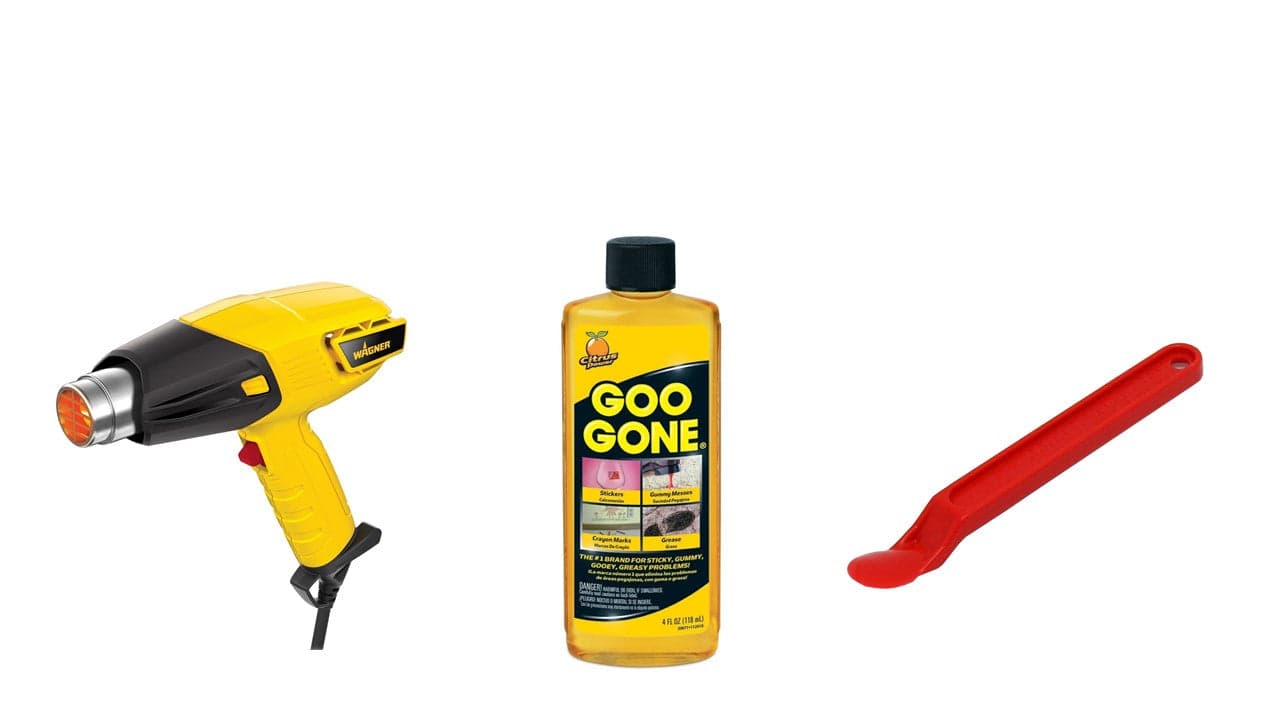
That five-step rhythm handles the large majority of what comes off a mixed pallet. The three cheap tools behind it, a heat gun, a plastic peeler, and a citrus solvent, run well under fifty dollars together and pay for themselves on the first crate.
Which Method Fits Which Surface?
The single biggest mistake is treating every package the same. Match the approach to what you are holding.
- Matte cardboard boxes. The forgiving case. Low heat plus a plastic peeler is plenty. Solvent only if glue lingers.
- Glossy printed retail boxes. Toys, electronics, brand-name cartons. The printed coating lifts if you get aggressive, so keep heat gentle and peel slower than feels necessary. Spot-test any solvent on a hidden corner because some inks smear.
- Glass and rigid plastic. Perfume bottles, cosmetics compacts, blister backs. These take heat and solvent well and clean up almost perfectly, which is exactly why they resell so cleanly.
- Poly bags and fabric hangtags. Apparel and footwear. Do not heat poly, it shrinks and warps. Snip plastic tag fasteners at the loop and peel adhesive tags cold and slow.
Sourcing plays into this too. If you are buying Amazon return pallets, you are working with a spread of these surfaces in one load, so keep all three tools within reach at the station rather than betting the whole pallet peels the same way.
What You Should Never Do to Branded Packaging
This is where margin leaks. Every item below turns a five-minute prep job into damaged goods.
- Never yank a cold, stubborn label. If it fights you, it is winning. Pulling harder rips the printed layer and leaves a pale scar worse than the sticker was.
- Never take a razor or box cutter to a printed face. One slip and you have sliced the artwork. Blades are for shrink wrap, not for labels sitting on branded cardboard.
- Never use acetone or nail-polish remover on glossy print. It dissolves the sticker and the ink underneath at the same time. Stick to citrus-based solvents and test first.
- Never soak a retail box to loosen glue. Water buckles cardboard and lifts the coating. What you save on adhesive you lose on a warped, unsellable carton.
- Never hold the heat gun too close or too long. Melted, shiny plastic or a bubbled coating is permanent. Distance and short bursts, always.
- Never just slap your own label over theirs to hide it. Covering a competitor's price tag does not satisfy marketplace policy and looks exactly as sketchy as it is when the buyer peels back the corner.
How Do You Get Rid of Sticker Residue?
Even a clean peel sometimes leaves a gummy shadow, and sticker residue is its own small battle. A drop of citrus solvent on a microfiber cloth, wiped in a circle rather than back and forth, lifts most of it. For a thin sticky film with no solvent handy, a second pass of gentle heat plus the plastic edge often rolls the residue up into a ball you can flick off. On glass and hard plastic you can be firmer. On printed cardboard, patience beats pressure every time. Whatever you use, let the surface dry fully before listing so the finished unit photographs clean.
Do You Have to Remove Retail Stickers to Sell on Amazon?
In practice, yes. Marketplaces expect the item to reach the buyer without another store's branding or pricing on it, and FBA prep standards lean the same direction. Build the removal step into your unit cost the way you build in freight, because it is real time you are spending per piece. If you are newer to sourcing and want to see how prep expectations line up with different load types before you commit, the how to buy a liquidation pallet guide walks through what typical loads contain and how manifested lots differ from quote-only mystery loads. A manifested lot lists what is inside before you pay, so you can guess at the label mix ahead of time; a mystery load asks you to price that unknown into your prep. Manifested lots also tend to label consistently, which keeps your heat-then-peel rhythm predictable across the whole pallet.
Building a Prep Station That Keeps Up
Speed comes from setup, not hurry. Lay out the three tools in the order you use them, keep a small trash bin for peeled labels right at the bench, and run heat-then-peel-then-wipe as an assembly line rather than finishing one unit start to end. A two-person team can prep a small pallet in under a couple of hours once the motions are muscle memory. The resellers who stay profitable treat this consistency as a discipline, the same steady-habits mindset covered in three habits of profitable liquidation resellers. And if prep feels like the boring part that makes you want to quit, remember that finishing the unglamorous work is exactly the one habit that separates full-time resellers from quitters.
Start With Cleaner Inventory
Clean labels are a margin decision disguised as a chore. A buyer who unboxes a spotless product leaves a better review, returns it less often, and comes back. Get the technique right, respect what each surface can take, and never make the six moves that damage branded packaging. Then keep your bench stocked with loads worth prepping by browsing the current Amazon return pallets and reaching out through the WhatsApp quote flow when a lot looks right. Strip the stickers the clean way, and the packaging sells the product for you.
Ready to source your next lot?
Browse fresh liquidation lots and pallets, ready to ship.